

By Jessica Lin — Was a good student. Forgot everything after each test. Learned why. Fixed it.
Last updated: June 2026
You study for a test. You do well. A week later, you remember almost nothing. You feel like you wasted your time.
You did not waste your time. You just fought against a natural process called the forgetting curve. And you lost.
But you can win. Once you understand how forgetting works, you can study in a way that makes memories stick.
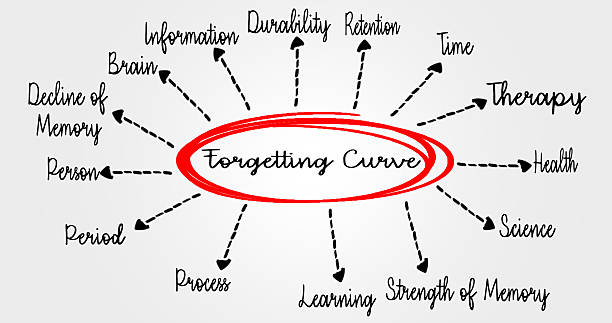
What Is the Forgetting Curve?
In the 1880s, psychologist Hermann Ebbinghaus discovered that humans forget exponentially. Right after learning something, memory drops fast. Then it levels off.
| Time After Learning | Memory Retained |
|---|---|
| 20 minutes | 60% |
| 1 hour | 45% |
| 9 hours | 35% |
| 1 day | 33% |
| 2 days | 28% |
| 6 days | 25% |
| 31 days | 21% |
Within one hour, you forget over half of what you learned. Within one week, you forget nearly 80%.
This is not a personal failing. This is how human memory works.
Why We Forget
Your brain prioritizes.
Your brain is bombarded with information constantly. It cannot remember everything. It keeps what seems important and discards the rest.
Without review, memories fade.
Memories are like paths in a forest. The first time you walk the path, it is faint. The more you walk it, the clearer it becomes. If you never walk it again, the path disappears.
Cramming creates weak memories.
Cramming forces information into short-term memory. It feels like you learned it. But without reinforcement, those memories vanish quickly.
How to Beat the Forgetting Curve
The solution is simple: review before you forget.
Each time you review, you strengthen the memory. The next time, it takes longer to forget.
| Review | Memory Strength |
|---|---|
| No review | Forgets within days |
| 1 review | Forgets within a week |
| 2 reviews | Forgets within a month |
| 3 reviews | Forgets within months |
| 4+ reviews | Remembers for years |
The Optimal Review Schedule
| Review | Timing | Action |
|---|---|---|
| First | Day 1 (learn it) | Study the material |
| Second | Day 2 | Review for 10 minutes |
| Third | Day 4 | Review for 10 minutes |
| Fourth | Day 8 | Review for 10 minutes |
| Fifth | Day 16 | Review for 10 minutes |
| Sixth | Day 32 | Review for 10 minutes |
After six reviews over one month, the information moves into long-term memory. You will remember it for years.
This is called spaced repetition.
How to Apply This to Your Studying
Method 1: Digital flashcards
Apps like Anki, Quizlet, and RemNote use spaced repetition automatically. You make cards. The app shows you cards right before you are about to forget them.
Method 2: Paper cards
Write a question on one side, answer on the other. Review your cards every day. When you get a card right, move it to a “review in 2 days” pile. Get it right again, move to “review in 4 days.” Keep increasing the interval.
Method 3: Calendar review
After learning something new, schedule future review sessions on your calendar.
| Day | Action |
|---|---|
| Monday | Learn chapter 1 |
| Tuesday | Review chapter 1 (10 min) |
| Thursday | Review chapter 1 (10 min) |
| Next Monday | Review chapter 1 (10 min) |
The Problem with Cramming
| Cramming | Spaced Repetition |
|---|---|
| One long session | Many short sessions |
| Feels productive | Feels repetitive |
| Forgets within days | Remembers for months |
| Works for the test | Works for life |
Cramming works for the test. It does not work for learning.
If you only care about passing the test, cram. If you want to actually remember what you studied, use spaced repetition.
Real-World Example
Two students need to learn 50 vocabulary words for a test in 4 weeks.
| Student A (Cramming) | Student B (Spaced Repetition) | |
|---|---|---|
| Method | Studies for 4 hours the night before | Studies 20 minutes per day for 12 days |
| Total time | 4 hours | 4 hours |
| Test score | A | A |
| Remembers after 1 month | Less than 20% | Over 80% |
Same total time. Same test score. Completely different long-term results.
How to Start Today
- Pick one subject you are studying.
- Make flashcards for the key concepts (digital or paper).
- Review them tomorrow.
- Review them again two days later.
- Keep the schedule.
Do this for one month. Compare what you remember to your old method. You will be surprised.
Common Mistakes
Making too many cards.
Start small. 10-20 cards per subject. You can always add more.
Reviewing cards you already know.
If a card is easy, trust the system. Move it to a longer interval. Do not keep reviewing it every day.
Not being honest.
When a card comes up, really ask yourself if you know it. Do not cheat. The system only works if you are honest.
Skipping reviews.
Missing one day is fine. Missing a week resets your progress. Be consistent.
The Bottom Line
You forget most of what you learn within a week. That is not laziness. That is biology.
But you can beat the forgetting curve. Review before you forget. Space out your reviews. Use flashcards or a calendar.
The same amount of study time. Much better long-term results.
Stop cramming. Start remembering.
About the author: Jessica Lin crammed through high school and college. She forgot almost everything. Now she uses spaced repetition. She finally remembers what she studies.
This article is for informational purposes. Different methods work for different people. Try spaced repetition. See if it works for you.